
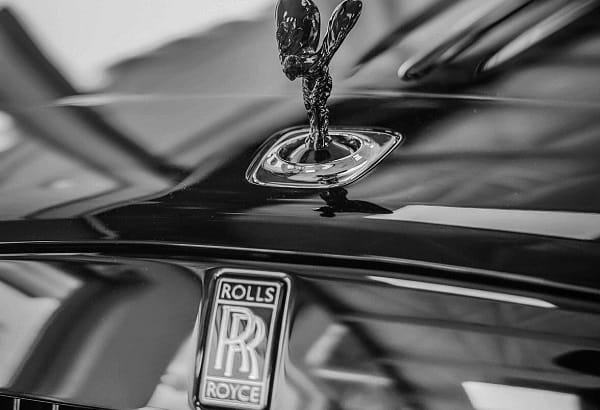
Rolls-Royce Motor Cars — the British luxury automobile manufacturer founded in 1906 by Charles Rolls and Henry Royce and headquartered at Goodwood in West Sussex — occupies a position at the absolute pinnacle of global luxury that no other automotive brand can credibly claim to match. The Phantom, Ghost, Cullinan, Spectre, and Wraith are not simply vehicles — they are rolling works of bespoke craftsmanship that take thousands of hours of hand assembly, use materials sourced from across the world’s most prestigious suppliers, and deliver an experience of silent, effortless mobility that has made Rolls-Royce the definitive symbol of extraordinary personal achievement for more than a century. The question of who serves as Rolls-Royce’s brand ambassador reveals one of the luxury automotive world’s most distinctive marketing philosophies — because Rolls-Royce Motor Cars deliberately does not maintain the conventional celebrity paid-ambassador programme that virtually every other major consumer brand employs, and this choice is itself a profound statement about the brand’s unique market position.
Rolls-Royce’s Ambassador Philosophy — The Ownership Model
| Category | Individuals / Approach | Country / Region | Brand Significance |
| Global sustainability ambassador | Jo Brown | UK | Formal ambassador role — content and brand storytelling |
| Celebrity owners — India | Mukesh Ambani, Amitabh Bachchan, Virat Kohli, Deepika Padukone | India | Organic ambassador through high-profile ownership |
| Celebrity owners — global | Jay-Z, Drake, Kylie Jenner, Beyoncé, Cristiano Ronaldo | Global | Organic luxury aspiration ambassador |
| Sports endorsement | Odell Beckham Jr., Conor McGregor | USA | Selective sports culture associations |
| Dealership brand managers | Dealer-level ambassadors globally | Regional markets | On-ground brand representation |
| Maharajas and royalty | Traditional Indian royal families | India | Historical patronage — heritage association |
Why Rolls-Royce Does Not Need a Traditional Brand Ambassador
Rolls-Royce Motor Cars’ deliberate absence of a conventional paid celebrity brand ambassador programme is not a gap in its marketing strategy — it is the marketing strategy. The reasoning is rooted in the brand’s fundamental positioning and its understanding of what creates and maintains desirability at the absolute upper boundary of luxury consumption.
A conventional brand ambassador relationship — where a celebrity is paid to be associated with a product — creates an aspirational connection between the celebrity’s audience and the product. This model works brilliantly for premium brands whose target customer aspires to own something they currently cannot. But Rolls-Royce’s target customer — the ultra-high-net-worth individual who can genuinely afford the Phantom Extended at ₹10 crore or more — does not form purchasing intentions based on celebrity influence. These individuals are themselves the reference points that others aspire to. Paying a celebrity to be seen in a Rolls-Royce would risk subordinating the brand to the celebrity’s identity rather than reinforcing the vehicle as the ultimate symbol of achievement that transcends any individual personality.
The brand’s philosophy instead embraces what might be called the ownership ambassador model — where the extraordinary individuals who actually own Rolls-Royce vehicles become the brand’s living ambassadors through their visible ownership. In India, the Rolls-Royce owner community includes some of the country’s most celebrated industrialists, Bollywood superstars, cricket legends, and business dynasty heirs — figures whose ownership of a Rolls-Royce communicates both their personal achievement level and the vehicle’s position as the appropriate choice for people who have genuinely reached the highest echelons of success.
Celebrity Owners as Organic Brand Ambassadors in India
India has become one of Rolls-Royce’s most strategically important markets — a country where the ultra-wealthy population has grown significantly and where Rolls-Royce ownership carries particular cultural weight as a statement of having genuinely arrived at the summit of personal achievement. India’s Rolls-Royce ownership community reads like a register of the country’s most celebrated individuals across multiple domains.
Among Bollywood’s most visible Rolls-Royce owners, Amitabh Bachchan’s ownership of multiple models spanning the Phantom and Ghost represents the aspirational pinnacle that every generation of Indian film industry royalty looks to. Deepika Padukone’s Rolls-Royce ownership aligns naturally with her status as India’s highest-profile luxury brand global ambassador — a woman who represents Louis Vuitton, Nykaa, and the global summit of Indian luxury culture simultaneously. Virat Kohli’s Rolls-Royce collection — including a Cullinan SUV — demonstrates how India’s sporting elite have crossed into the ultra-luxury automotive tier previously associated exclusively with inherited wealth and established business families.
India’s business and industrial families — the Ambanis, the Birlas, the Bajajs, and the Mahindras — maintain long-standing Rolls-Royce relationships that extend across multiple vehicles and decades of patronage. These relationships trace directly back to India’s princely era, when maharajas were among Rolls-Royce’s most important and enthusiastic global customers — purchasing extraordinary bespoke commissions including the famous Maharaja of Patiala’s fleet of seven Phantoms used for rubbish collection as a pointed response to perceived disrespect from the British. This historical Indian royal patronage remains part of Rolls-Royce’s India brand narrative — connecting contemporary luxury ownership to a heritage of aristocratic connoisseurship that adds cultural depth to modern commercial relationships.
Global Celebrity Ownership Culture
The global celebrity ownership culture that organically creates Rolls-Royce’s brand association with achievement and success includes some of the world’s most commercially powerful names in entertainment and sports — figures whose vehicle choices generate international media coverage regardless of any paid relationship.
| Global Celebrity Owner | Domain | Most Notable Model | Cultural Impact |
| Jay-Z | Music | Phantom | Hip-hop luxury culture definition |
| Beyoncé | Music | Custom Ghost | Female luxury aspiration icon |
| Drake | Music | Phantom custom | Toronto to global luxury |
| Kylie Jenner | Entertainment / Business | Multiple models | Gen Z luxury influence |
| Cristiano Ronaldo | Football | Phantom and Cullinan | Global sporting achievement symbol |
| Conor McGregor | MMA | Custom Wraith | Combat sport success statement |
| Nicki Minaj | Music | Ghost | Music industry success |
| David Beckham | Football / Fashion | Multiple | Global style icon association |
Rolls-Royce’s brand ambassador story is ultimately about the most authentic form of celebrity endorsement available to a luxury brand — genuine ownership by the people who define achievement in their respective fields. When the world’s most celebrated musicians, athletes, industrialists, and film stars choose Rolls-Royce as the expression of their highest personal success, no paid ambassador programme could generate more compelling proof of the brand’s ultimate status position.