
India’s mixed dal market alone is worth well over ₹118 billion and growing at a steady clip, driven by something that’s genuinely reshaping how urban Indians shop: the shift from loose pulses bought by weight at a local store to sealed, branded packets promising consistent quality, traceability, and hygiene. That shift has created real winners in the branded dal category, and the five names leading it have each carved out a genuinely distinct approach to earning that trust.
Tata Sampann
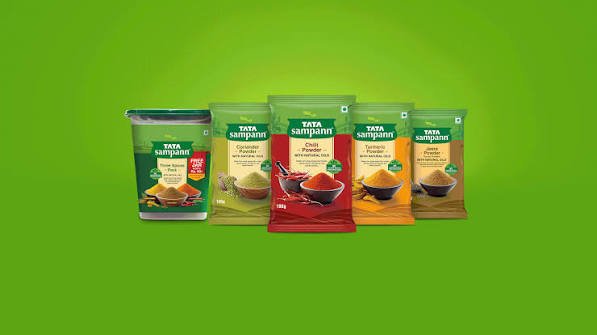
Tata Sampann has become one of the most widely recognized and trusted names in Indian pulses, leveraging the broader Tata brand’s decades-long reputation for quality and reliability across the food category. The brand emphasizes unpolished, hand-picked pulses processed to retain more natural nutrients compared to conventional polished dal, positioning itself as a genuinely premium yet accessible everyday choice. Its wide availability across both physical retail and major e-commerce platforms has helped Tata Sampann build strong penetration across urban Indian households specifically seeking a dependable, trusted brand without stepping fully into the organic-certified premium tier.
Fortune
Fortune, under Adani Wilmar, has extended its considerable cooking oil distribution strength into the pulses category, offering a wide variety including moong, toor, urad, and masoor dal. Adani Wilmar’s manufacturing footprint spans dozens of locations across multiple Indian states, giving Fortune genuine scale advantages in consistent processing and nationwide distribution that smaller, more regionally focused pulses brands simply can’t match. This scale has helped Fortune build a reputation for dependable quality at accessible pricing, appealing to households prioritizing value alongside brand trust.
Patanjali
Patanjali has built genuinely significant market share in the pulses category through its extensive distribution network and Ayurvedic, traditional-values branding, offering affordable pulses options without compromising meaningfully on quality. The brand’s aggressive retail expansion over the past decade has made it a genuine national competitor even in categories like pulses, where established players had long dominated. Patanjali’s positioning specifically resonates with consumers seeking traditional, home-style Indian food values combined with accessible, everyday pricing.
Organic Tattva
Organic Tattva has carved out a genuine niche by offering 100% organic pulses grown without synthetic pesticides or fertilizers, appealing specifically to the health-conscious, wellness-focused segment of Indian consumers. This organic-first positioning commands a price premium over conventional pulses brands, but it’s a premium a genuinely growing segment of urban buyers is willing to pay as awareness around chemical-free food production continues rising. Organic Tattva’s focus on certified organic sourcing gives it a distinct identity separate from the mass-market players competing primarily on price and distribution scale.
24 Mantra Organic
24 Mantra Organic occupies a similar premium, health-focused space, ensuring its pulses are chemical-free and grown using traditional farming methods, and has built particular popularity among premium buyers specifically seeking certified organic staples. As one of the more established organic food brands in India more broadly, 24 Mantra brings genuine credibility and a wider organic product ecosystem beyond pulses alone, which reinforces trust for consumers building an entirely organic pantry rather than buying organic pulses in isolation.
What’s Genuinely Reshaping the Category
Beyond these five established names, a meaningful shift toward hyper-transparent, farmer-connected sourcing models is emerging, with newer entrants emphasizing hand grading, stone-mill processing, unpolished grain quality, and direct fair pricing to farmers as genuine differentiators rather than just marketing language. This reflects a broader trend across Indian packaged food more generally — consumers increasingly want to know not just what they’re buying, but how and from whom it was sourced.
Government initiatives promoting pulses production and offering farmer subsidies have also improved overall dal production quality and consistency nationally, indirectly benefiting branded players by improving the raw material quality available across the entire supply chain. Meanwhile, the growing popularity of quick, convenient meal solutions and the expansion of organized retail and e-commerce continue pushing more pulses purchasing away from loose, unbranded buying toward the sealed, traceable packaging that all five of these brands specialize in.
What to Check Beyond the Brand Name
Regardless of which brand you choose, a few practical quality markers matter genuinely more than branding alone. Unpolished dal retains more of its natural nutrient content compared to heavily polished varieties, even if it looks slightly less uniform. Checking for visible impurities, consistent grain size, and a recent packaging date all matter for both cooking quality and nutritional value — polished, uniform-looking dal isn’t automatically the higher-quality choice it might appear to be on a store shelf.
The Bottom Line
Tata Sampann and Fortune lead the mass-market, everyday segment through established brand trust and extensive distribution, Patanjali competes aggressively on value with strong Ayurvedic-rooted branding, and Organic Tattva and 24 Mantra Organic serve the growing health-conscious segment specifically seeking certified organic staples. With India’s branded pulses market continuing to grow steadily and consumer expectations shifting toward greater transparency and traceability, these five names represent the clearest, most trusted starting points for Indian households navigating an increasingly crowded and quality-conscious dal aisle.
FAQs
Q1. Is organic dal from brands like Organic Tattva or 24 Mantra genuinely more nutritious than conventional dal from Tata Sampann or Fortune?
The core nutritional profile — protein, fiber, and key micronutrients — is largely similar between organic and conventional pulses, with the main practical difference being the absence of synthetic pesticide and fertilizer residue in certified organic options. If avoiding chemical residue specifically matters to you, organic brands are worth the premium; if your priority is simply consistent, reliable quality at a more accessible price, established conventional brands work perfectly well nutritionally.
Q2. How do I know if the dal I’m buying is genuinely unpolished, and does it actually matter for nutrition?
Unpolished dal typically looks slightly duller and less uniformly shiny compared to polished varieties, since polishing removes some of the outer bran layer along with a portion of the fiber and nutrients it contains. Checking the packaging specifically for “unpolished” labeling, rather than assuming based on appearance alone, is the more reliable way to confirm this, since some polished dal can still look reasonably natural depending on processing method.
Q3. Why has branded, packaged dal become more popular compared to buying loose pulses from a local grocer?
Branded packaged dal offers greater consistency in quality, hygiene, and sourcing transparency compared to loose pulses, where quality can vary considerably between batches and there’s less visibility into processing standards. The growth of organized retail and e-commerce has also made branded options more convenient to access and compare, accelerating this shift especially among urban households prioritizing consistency and food safety.
Q4. Should I buy pulses from a mass-market brand or a newer, smaller brand emphasizing direct farmer sourcing and fair pricing?
This comes down to your specific priorities — established mass-market brands like Tata Sampann and Fortune offer proven consistency, wide availability, and dependable quality at scale, while newer farmer-connected brands appeal to buyers specifically prioritizing traceability and supporting more direct, equitable farmer compensation models. Neither choice is objectively wrong; it’s worth deciding whether consistent scale and availability or sourcing transparency matters more for your specific household priorities.