
Red Bull commands roughly 61% of India’s entire energy drink market — a level of single-brand dominance that dwarfs even the concentrated leadership patterns seen in categories like ketchup or biscuits. That kind of near-monopoly position is genuinely rare, and it says something important about how energy drinks work as a category in India: unlike food staples where regional taste and price sensitivity fragment loyalty, this is a category where one brand became so synonymous with the product itself that competing feels almost like fighting for scraps.
Red Bull
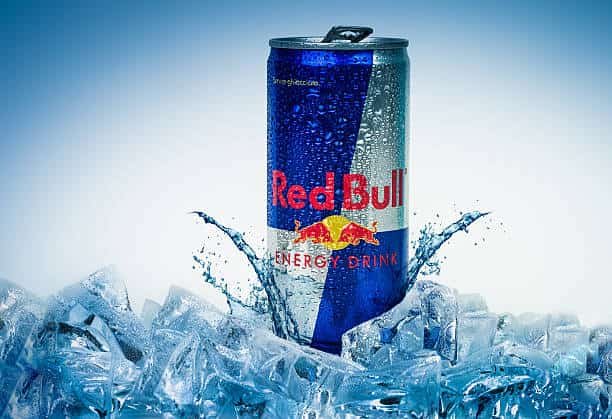
Red Bull holds a commanding, largely uncontested leadership position in India’s energy drink market, built on a formula combining caffeine, taurine, B-vitamins, and sucrose designed to deliver rapid mental alertness and physical endurance. The brand’s 250ml can has become something closer to a functional tool than simply a beverage, with genuinely pervasive availability across petrol stations, airports, and convenience stores throughout the country. Red Bull’s premium positioning, reinforced through decades of aggressive sports sponsorship and cultural marketing, has given it a level of brand equity that’s proven remarkably difficult for competitors to chip away at, even as newer challengers enter the space with lower prices or novel formulations.
Cloud 9
Cloud 9 holds the clear second position in India’s energy drink category, commanding roughly 17% market share and positioning itself as a genuine, accessible alternative to Red Bull’s premium pricing. While considerably smaller in absolute terms, Cloud 9’s position as the runner-up in a market this heavily concentrated at the top represents real, meaningful market presence rather than a marginal niche player. The brand has built its following largely through more accessible pricing while still delivering the core functional energy drink experience Indian consumers expect from the category.
Sting
Sting, from PepsiCo, has captured approximately 7% of India’s energy drink market, carving out genuine popularity through PepsiCo’s extensive existing beverage distribution network and brand marketing muscle. As part of a global beverage giant’s broader Indian portfolio, Sting benefits from shelf placement and distribution reach that smaller, more specialized energy drink brands genuinely struggle to match. Its positioning leans into affordability and mass accessibility rather than competing directly with Red Bull’s premium image, giving it a distinct lane within the category.
Tzinga
Tzinga, from Hector Beverages, represents one of the more established homegrown challengers in India’s energy drink space, built specifically around understanding and targeting Indian consumer preferences and price sensitivities more directly than global brands sometimes manage. As a domestic player competing against considerably larger multinational competitors, Tzinga’s continued relevance in industry discussions of major Indian energy drink players reflects genuine staying power in a category where smaller brands frequently struggle to maintain visibility against Red Bull’s overwhelming dominance.
Monster
Monster Energy, while holding a comparatively smaller share within India specifically compared to its considerably stronger global positioning, remains a recognized and actively marketed player in the Indian market. The brand’s 500ml can delivers notably higher caffeine content than Red Bull’s standard offering, appealing specifically to gamers, night-shift workers, and athletes seeking a stronger, longer-lasting boost. Monster’s Zero Ultra sugar-free variant has found particular traction among health-conscious young urban consumers, reflecting the brand’s broader global strategy of diversifying beyond its classic sugared formula into the growing zero-sugar segment.
What’s Genuinely Reshaping the Category
India’s energy drink market, valued at roughly $0.82 billion in 2026, continues growing steadily though at a considerably more moderate pace than the more aggressive projections once suggested for the category. Rising esports participation and gaming culture have become a genuine growth driver, with brands increasingly using tournament sponsorships and streamer partnerships to connect with younger consumers who represent the category’s core demographic. Demand for zero-sugar and natural-ingredient variants with clean-label claims is accelerating too, reflecting the same health-consciousness shift reshaping nearly every other Indian packaged beverage category simultaneously.
A meaningful structural challenge specific to India is the considerable GST burden applied to energy drinks, which compresses margins particularly for mass-priced offerings and creates real pricing pressure across the category. Despite this, leading players have maintained their positions through extensive distribution networks, growing partnerships with quick-commerce delivery platforms, and continued strategic sports sponsorship investment.
The Bottom Line
Red Bull’s overwhelming market leadership defines India’s energy drink category in a way few other Indian FMCG segments experience, while Cloud 9, Sting, Tzinga, and Monster each compete for meaningful but considerably smaller shares through accessible pricing, distribution muscle, domestic positioning, and higher-caffeine differentiation respectively. With gaming culture, health-conscious sugar-free formulations, and quick-commerce accessibility continuing to shape category growth, these five brands represent the clearest picture of how India actually reaches for an energy boost in 2026.
FAQs
Q1. Why is Red Bull so much more dominant in India’s energy drink market compared to other countries where Monster leads?
Red Bull’s early entry into India combined with decades of consistent premium brand-building and sports sponsorship gave it a first-mover advantage that’s proven remarkably durable, unlike markets like the US where Monster’s stronger bottling and distribution infrastructure through Coca-Cola has helped it edge ahead. This kind of market-specific brand dominance reflects historical distribution timing and marketing investment as much as any inherent product difference between the two brands.
Q2. Is Monster’s higher caffeine content genuinely stronger or riskier than Red Bull’s standard formula?
Monster’s classic 500ml can does contain more caffeine than Red Bull’s standard 250ml serving, which can deliver a more pronounced energy effect, but it also means a genuinely higher total caffeine intake per can that’s worth being mindful of, particularly if consumed alongside other caffeinated beverages in the same day. Checking the specific caffeine content listed on each can, rather than assuming based on brand reputation, is the more reliable way to manage your total daily intake responsibly.
Q3. Are the more affordable energy drink brands like Cloud 9 or Sting nutritionally comparable to Red Bull, or are they cutting corners?
Most established energy drink brands in India, including the more budget-friendly options, generally follow similar core formulations built around caffeine, taurine, and B-vitamins, with the price difference typically reflecting brand positioning and marketing investment rather than dramatically different ingredient quality. That said, it’s still worth checking the specific caffeine and sugar content on any brand’s label, since formulations can vary meaningfully even among functionally similar products.
Q4. Should I be concerned about the health effects of regularly drinking energy drinks, regardless of which brand I choose?
Regular, frequent energy drink consumption carries genuine health considerations worth being mindful of, particularly around cumulative caffeine intake and, for standard sugared variants, added sugar consumption over time. Opting for zero-sugar variants where available and being conscious of your total daily caffeine intake across all sources, not just energy drinks, is a reasonable way to enjoy these products more responsibly rather than treating any single brand as inherently safer than another.