
Bisleri commands roughly 36-40% of India’s organized packaged water market on its own, and the top three brands together control over half the entire category — yet nearly 45% of the overall market still belongs to regional and small local players. That split tells you something genuinely important about how bottled water actually works in India: it’s simultaneously one of the most brand-dominant FMCG categories and one where local distribution capability can still meaningfully compete against national giants, largely because water is heavy, low-margin, and expensive to ship long distances.
Bisleri
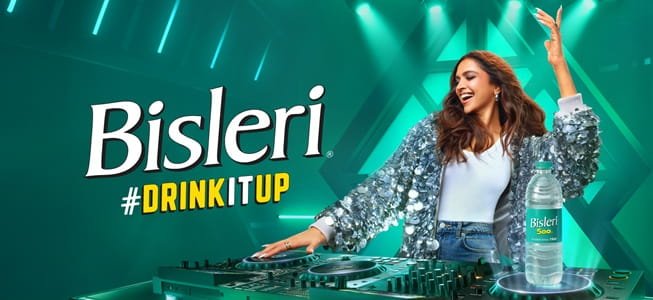
Bisleri remains the most widely recognized and trusted name in Indian packaged water, holding the largest market share among national players through decades of consistent quality and an extensive pan-India distribution network spanning both urban and semi-urban regions. The brand’s dominance is particularly strong in North and West India specifically, even as it maintains genuine nationwide presence across retail, hospitality, and institutional channels. Bisleri’s long-standing trust factor has made it something close to a generic term for bottled water in many parts of India, a level of brand equity that’s proven remarkably durable against considerably better-funded multinational competitors.
Kinley
Kinley, owned by Coca-Cola India, holds the clear second position in the market, leveraging the parent company’s unmatched distribution infrastructure to maintain widespread accessibility across restaurants, retail outlets, and public spaces nationwide. This distribution strength allows Kinley to compete effectively against Bisleri’s established brand trust, since Coca-Cola’s existing beverage delivery network gives Kinley shelf placement and institutional supply relationships that would be genuinely difficult and expensive for a standalone water brand to replicate independently.
Aquafina
Aquafina, under PepsiCo India, holds a solidly established third position, known for consistent purified water quality and strong presence specifically across supermarkets, convenience stores, and the broader food service sector. Like Kinley, Aquafina benefits considerably from its parent company’s extensive existing beverage distribution infrastructure, giving it reliable institutional and retail placement that reinforces its position among the market’s leading national brands even without matching Bisleri’s decades-long brand recognition advantage.
Bailley
Bailley, from Parle Agro, has built genuine strength specifically through affordability and strong distribution in Tier 2 and Tier 3 cities, positioning itself as the go-to option for mass consumers in markets where premium pricing matters less than reliable, accessible availability. This focus on smaller cities and price-sensitive consumers gives Bailley a distinct competitive lane separate from the more metro-concentrated battles between Bisleri, Kinley, and Aquafina, leveraging Parle Agro’s established FMCG distribution network built through its broader beverage portfolio.
Himalayan
Himalayan occupies a genuinely distinct premium tier within the category, sourced from Himalayan springs and known specifically for its natural mineral content, widely used in luxury hotels, fine dining establishments, and corporate gifting contexts. This premium natural spring water segment, while representing a smaller share of overall volume compared to mass-market purified water brands, is growing considerably faster than the mainstream category, driven by increasingly health-focused, affluent urban consumers willing to pay meaningful premiums for perceived sourcing transparency and minimal processing.
The Premium vs. Mass Market Divide
This split between mass-market purified water and premium natural spring water represents one of the most important structural dynamics in the category right now. Brands like Bisleri, Kinley, and Aquafina compete primarily on affordable, reliable access, leveraging vast distribution networks and economies of scale to maintain pricing that mass consumers can absorb regularly. Premium natural spring water brands like Himalayan, alongside international names like Evian and Volvic, charge dramatically higher prices — commonly 300-500% premiums over standard purified water — thriving specifically on urban affluence, sourcing transparency claims, and lifestyle positioning rather than competing on distribution scale.
Where Growth Is Actually Happening
Tier-1 cities — Mumbai, Delhi, Bangalore, Chennai, Kolkata, and Hyderabad — currently account for the majority of packaged water consumption nationally, driven by dense populations, corporate hubs, and affluent buyers fueling demand across both mass and premium segments simultaneously. The natural spring water segment specifically is growing at a considerably faster rate than the overall category, reflecting genuine, sustained consumer interest in perceived purity and premium positioning among urban, health-conscious buyers. Meanwhile, counterfeit and unregulated “mineral water” products remain a persistent concern in the broader unorganized market, reinforcing why brand trust and FSSAI-aligned quality standards continue mattering so much to Indian consumers choosing between established names.
The Bottom Line
Bisleri, Kinley, and Aquafina together dominate India’s mass-market packaged water category through decades of distribution investment and brand trust, while Bailley captures genuine strength in price-sensitive Tier 2 and Tier 3 markets, and Himalayan anchors the considerably smaller but faster-growing premium natural spring water segment. With nearly half the overall market still held by regional and local players, and premium natural water continuing to outpace mainstream category growth, these five brands represent both the established leadership and the clearest emerging dynamics shaping how India buys bottled water heading through 2026.
FAQs
Is there a genuine quality difference between mass-market brands like Bisleri and premium brands like Himalayan, or is it mostly marketing? Premium natural spring water brands like Himalayan generally undergo less processing and retain natural mineral content from their specific source, which is a genuine, measurable difference from purified water brands like Bisleri or Aquafina, which are typically processed and filtered from various water sources. Whether that difference justifies the significant price premium depends on your personal priorities around mineral content and sourcing transparency, since both categories meet the same core FSSAI safety standards for safe drinking water.
Why do regional and local water brands still hold such a large share of the Indian market despite national brands’ dominance? Water is heavy and relatively low-margin to transport over long distances, which makes local production and distribution genuinely cost-competitive against national brands in specific regional markets, especially in smaller towns and rural areas. This logistics-driven dynamic means local brands can often match or beat national players on price and freshness within their specific geographic footprint, even without the marketing budgets of Bisleri or Kinley.
How can I tell if a bottled water brand I’m buying is a genuine, quality-certified product rather than an unregulated local seller? Checking for a valid FSSAI license number and ISI certification mark on the bottle label is the most reliable way to confirm you’re buying a properly regulated product, since counterfeit or unregulated “mineral water” selling essentially untreated tap water remains a documented concern in India’s less organized market segments. Established brands like Bisleri, Kinley, and Aquafina consistently display this certification clearly, which is part of why brand trust matters so much in this specific category.
Is Bailley or a similar mass-market brand a good choice for bulk office or event water supply compared to premium options? For everyday bulk consumption where cost efficiency matters more than premium sourcing claims, mass-market brands like Bailley, Bisleri, or Kinley offer reliable, FSSAI-compliant quality at considerably lower per-unit cost than premium natural spring water options. Reserving premium brands like Himalayan for specific hospitality or corporate gifting contexts, where the presentation and positioning genuinely matter, while using mass-market brands for routine daily hydration needs, is generally the more cost-effective approach for most offices and events.