
Yes, caravans are fully legal in India — the Motor Vehicles Act, 1988 formally recognizes “Motor Caravan” as a registered vehicle category, and India’s caravan and van-life scene has genuinely matured in recent years, with people renting caravans for Ladakh road trips, buying factory-built motorhomes, or commissioning custom conversions from experienced workshops. That said, “legal” comes with real conditions attached: how you register the vehicle, whether it’s factory-built or self-converted, and which state you’re operating in all shape what compliance actually looks like in practice.
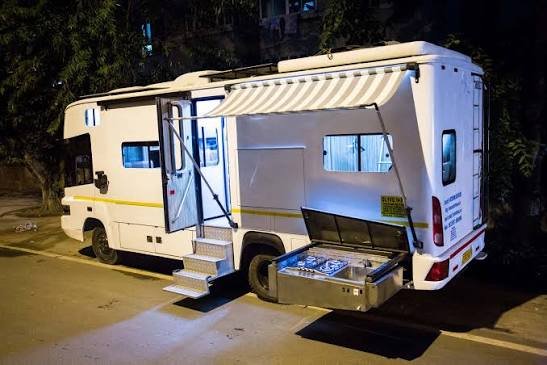
The Legal Foundation: Motor Vehicles Act and AIS-124
Caravans in India are governed by the Motor Vehicles Act, 1988, the Central Motor Vehicles Rules (CMVR), and a specific technical standard called AIS-124 (Automotive Industry Standard 124), which lays out the procedure for type approval and certification of motor caravans to ensure they comply with CMVR requirements. A related standard, AIS-113, is also referenced for certain caravan configurations.
This means a caravan isn’t treated as some undefined, improvised vehicle — it has its own recognized body type and a formal certification pathway, just like any other vehicle category.
Factory-Built vs. Self-Converted: Two Very Different Paths
This is the single most important distinction to understand, since it determines how much work you’ll need to put in to stay compliant.
Factory-built caravans are the straightforward route. If you buy a caravan or motorhome manufactured and certified by an approved company (built to AIS-124 standards from the ground up), registration is relatively simple:
- It gets registered under the “Motor Caravan” body type code directly
- The manufacturer or dealer typically includes RTO registration support as part of the purchase process
- No separate conversion approval is needed, since the vehicle was never anything other than a caravan
Self-converted caravans — where someone takes a van, bus, or truck and converts it into a camper — face considerably more scrutiny:
- The conversion is legal only with prior RTO approval
- The Registration Certificate (RC) must be updated to reflect the change, with the vehicle’s body type officially changed to “Motor Caravan,” “Camper Van,” or “Special Purpose Vehicle”
- You’ll typically need to carry the builder’s or workshop’s certificate confirming the conversion meets required standards
- Skipping this step means your caravan is technically illegal on paper, even if it looks and functions perfectly fine, and it can be treated as an unauthorized modification — the same legal problem as any unapproved structural change to a vehicle.
A commonly cited practical workaround: if an RTO refuses to register a conversion specifically as “Motor Caravan,” applying under the broader “Special Purpose Vehicle” category, along with the builder’s certificate, is often suggested as an alternative path.
Private Use vs. Commercial/Tourist Use
Beyond the factory-built/converted distinction, how you intend to use the caravan also changes the registration category:
For private, personal use:
- Registered as a non-transport vehicle at your nearest RTO
- You pay a one-time road tax calculated as per the private car category, along with standard registration fees
- A regular driving license is generally sufficient for most caravans under typical weight thresholds (commonly cited as under 7.5 tonnes gross vehicle weight)
For commercial use (tour operators, rentals):
- Registered as a transport vehicle, with the RC category specifically listed as “Tourist Motor Caravan/Camper”
- A tourist or commercial permit is mandatory
- A fitness certificate is generally required, particularly once the vehicle exceeds roughly 3.5 tonnes
- Comprehensive insurance appropriate to commercial operation is also typically required
State-Specific Caravan Tourism Policies
Several Indian states have gone further than just permitting caravans — they’ve built dedicated policies to actively encourage caravan tourism, which brings its own layer of registration requirements on top of the standard RTO process.
Goa has one of the most developed frameworks. Under its Caravan Tourism Policy, caravans must:
- Comply with CMVR and AIS-124/AIS-113 standards, with a minimum of four wheels
- Be mandatorily registered at a Goa RTO
- Separately register with the Department of Tourism, Government of Goa, paying an annual registration fee (around ₹1,000 per caravan, subject to revision)
- Remain operational in Goa for at least one year from the date of registration
Tamil Nadu has similar guidelines for registering caravan tour operators and caravan park operators, requiring a minimum fleet size and compliance with the same AIS-124 standard, alongside specific infrastructure requirements for caravan parks (electricity, water compatibility, physical separation from other facilities).
Maharashtra, Kerala, Rajasthan, and Himachal Pradesh have also introduced varying degrees of supportive caravan tourism policy, with Rajasthan notably developing caravan parks at 20-plus tourist spots, and Kerala streamlining registration specifically for caravan-friendly travel.
Where You Can Actually Use and Park a Caravan
Legal registration solves one problem, but it doesn’t automatically solve another common question: where can you actually drive and stay overnight?
- Caravans are generally allowed on national highways and rural roads without issue, assuming proper registration.
- There’s no universal, nationwide right to park overnight anywhere you like — local municipal rules apply, and these vary significantly by city and state.
- Dedicated caravan parks, where available (increasingly common in states like Rajasthan, Goa, and parts of the Himalayan belt), offer a clearly legal and infrastructure-supported option for overnight stays, often designed specifically with electricity and water hookups compatible with caravan specifications.
- Parking in undesignated areas, particularly in cities, can run into local traffic or parking regulations unrelated to the caravan’s own registration status.
What Makes a Caravan Illegal in Practice
Based on how enforcement actually works, a caravan becomes a legal problem specifically when:
- It’s a self-conversion done without RTO approval, meaning the RC doesn’t reflect its actual current form
- It fails to meet AIS-124/CMVR safety and structural standards
- It’s operated commercially without the required tourist/transport permit
- It exceeds applicable weight limits without the corresponding fitness certificate
The core principle repeated across legal guidance on this topic is straightforward: a legal caravan follows the registration system properly; an illegal one simply bypasses it.
Frequently Asked Questions
Q1. If I buy a factory-built motorhome, do I still need to visit the RTO at all?
Yes, you’ll still need standard RTO registration under the “Motor Caravan” body type, though reputable manufacturers and dealers typically handle or support this process directly as part of the purchase, unlike self-conversions, which require a separate approval step for the modification itself.
Q2. Can I convert my own van into a camper and register it without a workshop’s help?
While not strictly impossible, having a proper builder’s or workshop certificate confirming the conversion meets CMVR and AIS-124 standards makes RTO approval significantly smoother, and some RTOs may be reluctant to approve a conversion without this kind of documented compliance.
Q3. Do I need a special driving license to drive a caravan in India?
For most caravans under roughly 7.5 tonnes gross vehicle weight, a standard driving license is sufficient; larger or heavier caravans, particularly those registered for commercial/tourist use, may require a commercial driving license.
Q4. If my state doesn’t have a specific caravan tourism policy like Goa or Kerala, can I still legally own and use one?
Yes — standard Motor Vehicles Act registration as a “Motor Caravan” applies nationwide regardless of whether your state has a dedicated caravan tourism policy; those state-specific policies add extra registration layers mainly for commercial tour operators and dedicated caravan parking infrastructure, not a baseline requirement for private ownership.