
The market for counterfeit Apple chargers has grown considerably more sophisticated over the past few years. Fakes no longer look obviously cheap — some copies are visually almost indistinguishable from genuine Apple accessories right out of the packaging. But the difference between an original and a counterfeit charger isn’t just about brand authenticity. Fake chargers regularly fail to deliver stable power, generate excess heat, and in documented cases have caused battery degradation and electrical damage to iPhones. Knowing how to verify your charger before trusting it with your phone is a practical safety check — not just brand loyalty.
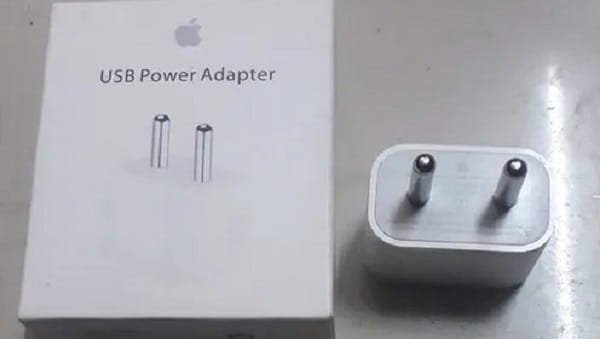
Understanding Apple’s Charging Lineup in 2026
Apple’s current charger lineup uses USB-C exclusively. The 20W USB-C Power Adapter remains the standard fast charger for iPhone 15, 16, and 17 series. The 30W and 35W Dual USB-C Port Power Adapters are available for users who want faster speeds or multiple device charging simultaneously. The MagSafe Charger handles wireless charging for MagSafe-compatible iPhones. The older 5W USB-A “cube” charger was phased out years ago but still circulates heavily in the counterfeit market.
Method 1: Check for the MFi Certification Label
MFi stands for Made for iPhone/iPad/iPod — Apple’s official licensing program for third-party accessory manufacturers. Original Apple chargers and genuine MFi-certified third-party cables carry specific markings that counterfeit products cannot legitimately reproduce.
On genuine Apple chargers and cables, look for clean, precisely printed text on the cable or adapter body. Original Lightning cables (used for older iPhones) print “Designed by Apple in California” and “Assembled in China” (or Vietnam) with sharp, evenly spaced characters. On USB-C cables and adapters, regulatory markings including CE, UL, and other certifications appear in crisp, recessed text — not printed stickers or surface ink that smudges or peels.
Counterfeit cables often have text that’s slightly blurry, uneven spacing between characters, or text printed at a slight angle. Under good lighting and a brief examination, the print quality difference is noticeable.
Method 2: iPhone Accessory Warning Message
Plug the charger into your iPhone. Watch the screen carefully. If a notification banner appears saying “This accessory may not be supported” or “This accessory is not supported”, the iPhone’s authentication chip has failed to verify the charger as genuine.
Apple iPhones carry an authentication protocol that communicates with the charging accessory when it’s connected. Original Apple chargers and properly licensed MFi-certified third-party accessories complete this handshake without any warning. Counterfeit accessories either fail the authentication entirely — triggering the warning — or pass it intermittently, causing the phone to start and stop charging unpredictably.
If you see this message, stop using the charger. It doesn’t just indicate a compatibility issue — it signals that the accessory hasn’t passed Apple’s safety certification.
Method 3: Physical Weight and Build Quality
Genuine Apple power adapters have a distinctive weight and build quality that counterfeits rarely replicate accurately. Hold the charger in your hand. Original Apple adapters feel dense and solid — the internal components are substantial. Counterfeit adapters typically feel noticeably lighter because manufacturers use fewer or lower-quality internal components to cut costs.
The finish on genuine Apple chargers is uniform and smooth with no visible seams, bubble imperfections, or colour inconsistencies in the plastic. The prongs on genuine UK and EU adapters fold in with a firm, precise click and no wobble. On counterfeits, the prongs often feel loose, the fold mechanism is stiff or weak, and the plastic may show slight colour variation between the body and the prong housing.
The USB-C port opening on a genuine Apple adapter has precise tolerances — cables fit snugly without any lateral movement. On fake adapters, the port opening is often slightly wider or misaligned.
Method 4: Check the Serial Number and Model Number
Every genuine Apple charger carries a model number printed on its body. For example, the 20W USB-C Power Adapter carries the model number MHJA3ZM/A (white, UK variant) or MUVV3ZM/A depending on the region. These model numbers can be cross-referenced against Apple’s official product database.
Visit apple.com/support and search for the model number printed on your charger. If the model number matches an officially listed Apple product with matching specifications, the charger’s documentation is consistent with an original. If the model number returns no results, or matches a different product than what you’re holding, the charger is suspect.
Additionally, cables bundled with iPhones carry a serial number that can be checked through Apple’s warranty verification system at checkcoverage.apple.com by entering the iPhone’s serial number — the system confirms whether original Apple accessories were included with the device.
Method 5: Purchase Source Verification
The most reliable guarantee of authenticity is where you buy. Apple’s official online store, Apple retail stores, and authorised premium resellers — such as Croma, Reliance Digital, and Vijay Sales in India — stock only genuine Apple products. Purchasing from these channels eliminates the authenticity question entirely.
Marketplace listings on platforms like Flipkart, Amazon, and Meesho carry both genuine and counterfeit products depending on the seller. Check whether the seller is listed as Fulfilled by the official Apple brand store or an authorised reseller. Third-party marketplace sellers with no brand affiliation and unusually low prices are the primary source of counterfeit Apple accessories in the Indian market.
A 20W Apple USB-C charger retails at approximately ₹1,900 officially. Listings at ₹400–₹700 claiming to be original Apple accessories are almost certainly counterfeit — the manufacturing cost of a genuine Apple charger with proper safety components far exceeds those prices.
Dangers of Using a Counterfeit iPhone Charger
The risks of using a fake charger extend beyond slow charging or intermittent connectivity. Counterfeit chargers frequently lack the surge protection, thermal regulation, and voltage stabilization circuits present in genuine Apple adapters. This means they can deliver unstable power that stresses the iPhone’s battery chemistry over time, reducing capacity faster than normal usage would. In more severe cases, overheating from a poorly regulated fake charger can cause battery swelling — a physical deformation that damages the phone’s internal components.
Apple’s USB-C Power Delivery implementation requires precise voltage and current negotiation between the charger and the device. Counterfeit adapters that fail this negotiation may deliver incorrect voltage levels silently — appearing to charge normally while delivering power outside the iPhone’s optimal charging parameters.
FAQs
Q: What message appears on iPhone when a fake charger is connected?
A: The iPhone displays “This accessory may not be supported” or “This accessory is not supported” if authentication fails. This banner appears near the top of the screen shortly after connection.
Q: Can a fake charger damage my iPhone battery?
A: Yes. Counterfeit chargers delivering unstable voltage can accelerate battery degradation and in some cases cause battery swelling due to thermal mismanagement.
Q: Is a third-party charger the same as a fake charger?
A: No. Genuine MFi-certified third-party chargers from brands like Anker, Belkin, and ESR pass Apple’s authentication and are safe to use. A fake charger is a counterfeit product that fails authentication and lacks proper safety components.
Q: How can I tell if a charger from an online marketplace is genuine?
A: Check that the seller is the official Apple brand store or a verified authorised reseller. Compare the price against Apple’s official retail price — anything significantly cheaper is a red flag.
Q: Does Apple’s warranty cover damage caused by a fake charger?
A: No. Apple’s warranty explicitly excludes damage caused by non-Apple or non-MFi-certified accessories. Using a counterfeit charger that damages your iPhone’s battery or charging port voids coverage for that damage.