
Two companies alone account for well over half of India’s ₹1.17 lakh crore biscuit market — and remarkably, rural India, not urban metros, drives roughly 55% of total national biscuit consumption. That single statistic explains almost everything about how this category actually works: the brands that win here aren’t necessarily the ones with the flashiest premium packaging, but the ones that can reliably put a ₹5 pack in front of a customer in the most remote village store in the country.
1. Britannia
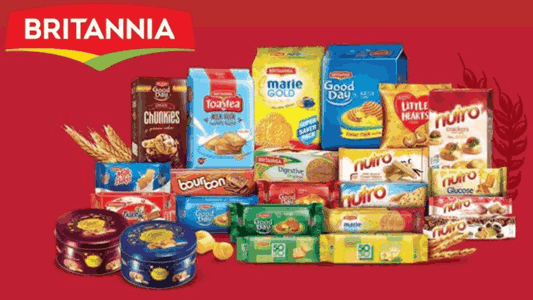
Britannia Industries, founded in 1892 and headquartered in Bangalore, holds the largest overall market share among biscuit brands in India, with estimates placing its position anywhere between 28% and 38% depending on the specific measurement period and methodology used. The company’s portfolio spans Good Day, Tiger, Marie Gold, Bourbon, 50-50, and NutriChoice, giving it genuine breadth across mass-market glucose biscuits and increasingly health-focused, premium product lines simultaneously. Britannia has continued investing heavily in new product development, healthier formulations like fiber-rich and sugar-free options, and innovative packaging specifically to maintain its edge in an increasingly competitive market.
2. Parle
Parle Products, founded in 1929 and headquartered in Mumbai, remains the closest competitor to Britannia, with market share estimates commonly cited in the 29% to 35% range depending on the source. Parle-G, the company’s flagship product, is widely regarded as the best-selling biscuit brand in the world, and its dominance in both rural and urban Indian markets rests heavily on aggressive low pricing and an extraordinarily deep distribution network reaching remote villages that few competitors can match. Beyond Parle-G, the company’s broader portfolio includes Monaco, Hide & Seek, Krackjack, and Milano, giving it genuine range across glucose, cream, and premium cookie segments.
3. Sunfeast
Sunfeast, ITC Limited’s biscuit brand, has built a sturdy presence in the Indian market by consistently catering to changing consumer preferences, introducing innovative flavors alongside genuinely healthier options like digestive biscuits and high-fiber cookies. As part of ITC’s much broader diversified conglomerate structure spanning FMCG, hospitality, and agribusiness, Sunfeast benefits from considerable corporate resources and marketing muscle that smaller, more specialized biscuit companies simply can’t match. This has allowed Sunfeast to position itself credibly across both mass-market and increasingly health-conscious premium segments simultaneously.
4. Priya Gold
Priya Gold, under Surya Foods & Agro Ltd and founded in the early 1990s, has built genuine popularity specifically through cream biscuits and flavored variants, complemented by distinctive, colorful packaging that helps it stand out on crowded shelves. The brand has performed particularly well in tier-2 and tier-3 cities, an important distinction given how much of India’s overall biscuit consumption comes from beyond the major metros. Its wide product range spanning Butter Bite, various cream biscuits, and Marie options gives Priya Gold genuine relevance across multiple price points and consumer segments within its core regional strongholds.
5. Anmol
Anmol, founded in 1994, has built particular strength specifically across North and East India through a focus on budget-oriented biscuits that resonate strongly with value-conscious consumers in these regions. The brand’s core range spans cream rolls, digestive biscuits, and glucose options, and its continued growth into new geographic markets reflects a broader pattern among India’s regional biscuit players — building deep density in a specific area before expanding outward, rather than attempting immediate nationwide competition against Britannia and Parle.
What’s Actually Driving Category Growth
Rural markets remain the single biggest growth lever in Indian biscuits, with brands specifically pursuing smaller, more affordable ₹5 packs and deeper kirana store partnerships to capture this consumption base more effectively. At the same time, a genuinely distinct premiumization trend is reshaping the upper end of the category — urban millennials increasingly willing to spend more on artisanal, gourmet-style cookies packaged in resealable pouches and design-forward gift boxes, a segment that operates almost entirely separately from the mass-market glucose biscuit competition dominating rural sales.
Health-focused innovation is accelerating across the category too, with Britannia’s protein-enriched biscuits and Sunfeast’s sugar-free, fiber-rich options leading established players, while newer entrants like Yoga Bar, Nourish Organics, and 24 Mantra Organic are introducing vegan, gluten-free, and millet-based options specifically targeting increasingly health-conscious Indian consumers.
The Bottom Line
Britannia and Parle together command a dominant share of India’s biscuit market, built on decades of brand trust, extensive rural distribution, and continuous product innovation, while Sunfeast, Priya Gold, and Anmol each carve out genuine, meaningful positions through corporate scale, regional focus, and value-oriented pricing respectively. With rural consumption still driving the majority of category volume even as urban premiumization accelerates at the opposite end, these five brands together capture the full spectrum of how India actually buys and eats biscuits in 2026.
FAQs
Q1. Why does rural India drive more biscuit consumption than urban metros, and does this affect which brands dominate?
Rural markets account for roughly 55% of national biscuit consumption, largely because biscuits function as an affordable, widely accessible everyday snack and light meal accompaniment across income levels in these areas. This is exactly why brands like Parle-G, built around aggressive low pricing and deep village-level distribution, have maintained such durable market leadership compared to more premium-focused competitors.
Q2. Are the newer health-focused biscuit brands like Yoga Bar or 24 Mantra Organic worth the higher price compared to Britannia or Parle’s standard offerings?
These newer brands generally use less processed ingredients and avoid added sugars or refined flour more consistently, which can matter if you’re specifically managing dietary restrictions or prioritizing whole-grain, gluten-free, or vegan options. For everyday casual snacking without specific dietary concerns, established brands’ standard or health-focused product lines, like Britannia’s protein biscuits or Sunfeast’s fiber-rich range, typically offer solid nutritional value at a considerably lower price point.
Q3. How accurate are the different market share percentages reported for Britannia and Parle, since sources seem to vary?
Market share estimates genuinely vary between reports depending on whether they measure value sales, volume sales, specific time periods, or different market research methodologies, which explains why you’ll see Britannia cited anywhere from 28% to 38% and Parle from 29% to 35% across different sources. Rather than fixating on the exact percentage, it’s more useful to understand that these two brands consistently hold the two largest shares by a considerable margin over every other competitor in the category.
Q4. Is Parle-G really the best-selling biscuit brand in the world, or is that just a marketing claim specific to India?
This claim is widely cited across multiple independent industry sources and reflects Parle-G’s genuinely enormous volume sales driven by its combination of extremely low pricing and India’s massive population and biscuit-consuming culture. Given how deeply Parle-G’s distribution reaches into remote areas alongside major urban centers, the volume-based claim holds up credibly even when compared against global biscuit brands with stronger presence in wealthier markets but considerably smaller overall consumer bases.