
Goods and Services Tax — universally known as GST — is the most comprehensive indirect tax reform in independent India’s history. Implemented on July 1, 2017 under the rallying call of One Nation, One Tax, One Market, GST unified India’s fragmented multi-tier indirect tax system — which previously imposed central excise duty, state VAT, service tax, and dozens of other levies — into a single nationwide tax framework operating across four rate slabs of 5%, 12%, 18%, and 28% with additional cess on specified items. The political and economic ambition of GST’s implementation was extraordinary — requiring unprecedented cooperation between the central government and all state governments through the GST Council — and communicating this complex reform to India’s 1.4 billion citizens required a brand ambassador capable of reaching every corner of the country with credibility, clarity, and cross-generational appeal. That ambassador was Amitabh Bachchan.
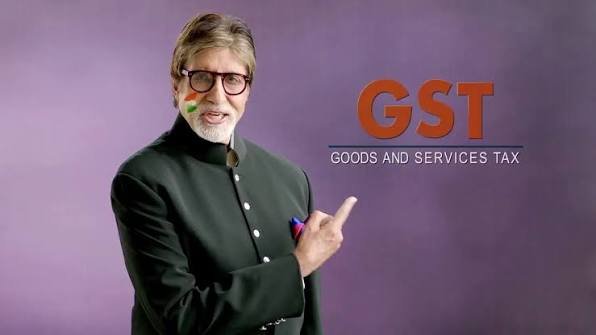
GST Brand Ambassador — Key Facts
| Parameter | Details |
| GST brand ambassador | Amitabh Bachchan |
| Appointing authority | Central Board of Excise and Customs (CBEC) |
| Appointment date | June 19, 2017 |
| Context | GST implementation scheduled July 1, 2017 |
| Campaign format | 40-second video — nationwide broadcast |
| Message theme | GST as unifying force — One Nation One Tax One Market |
| Distribution | Social media, television, government channels |
| Previous GST ambassador | PV Sindhu — badminton champion |
| Finance Minister at launch | Arun Jaitley |
| GST full form | Goods and Services Tax |
| GST implementation date | July 1, 2017 |
| GST Council formation | Represents central + all state governments |
| Tax slabs | 5%, 12%, 18%, 28% |
| National tag line | One Nation One Tax One Market |
Amitabh Bachchan — Why He Was the Perfect GST Ambassador
On June 19, 2017 — twelve days before GST’s scheduled July 1 implementation — the Central Board of Excise and Customs officially appointed Amitabh Bachchan as the brand ambassador for GST, making the legendary Bollywood actor the face of India’s most significant tax reform. A 40-second video featuring Bachchan explaining GST was produced and distributed — with Finance Minister Arun Jaitley’s official Twitter account sharing it with the hashtag GST will create a unified national market and the tagline OneNationOneTaxOneMarket.
In the video, Bachchan drew a powerfully simple analogy — comparing GST’s unifying function to the three colours of India’s national tricolour flag, each distinct in its identity but together forming a single unified symbol of national identity. This metaphor, delivered in Bachchan’s authoritative voice that three generations of Indians have grown up associating with trust, gravitas, and moral clarity, communicated the abstract concept of tax unification in terms that resonated with audiences who had no background in tax policy or economics.
The selection of Amitabh Bachchan for GST ambassadorship was not incidental — it reflected a precise understanding of what the reform’s communication challenge required. GST’s implementation faced significant public confusion, trade community anxiety about compliance complexity, and political opposition that framed it as disruptive to small businesses. An ambassador whose personal brand embodied reliability, national pride, and the ability to be trusted unconditionally by the broad Indian public was essential — not a celebrity associated with youth culture or regional identity, but a figure whose presence commanded respect across every state, language, income bracket, and age group in India simultaneously. Amitabh Bachchan is the only Bollywood personality who genuinely meets all these criteria.
PV Sindhu — The Previous GST Ambassador
Before Amitabh Bachchan’s appointment, badminton Olympic medallist PV Sindhu had served as a GST brand ambassador — her appointment reflecting the initial phase of GST awareness building that targeted younger, sports-following audiences. Sindhu’s 2016 Olympic silver medal had made her one of India’s most celebrated sporting heroes, and her appointment as GST ambassador represented the government’s recognition of sports celebrities’ power to reach demographics that conventional government communication misses.
The transition from Sindhu to Amitabh Bachchan for the final pre-implementation push reflected a deliberate escalation in communication gravitas — recognising that as GST’s July 1 implementation date approached, the messaging needed to move from awareness of the reform’s existence to genuine public acceptance and confidence in its effectiveness, requiring an ambassador whose authority with India’s broadest possible adult audience was unmatched.
GST’s Historical Significance and Communication Challenge
| Challenge | Detail | Ambassador’s Role |
| Public understanding | Complex multi-slab system unfamiliar to most citizens | Simple metaphor — national flag analogy |
| Trade community anxiety | Compliance burden feared by small businesses | Trust transfer from credible national figure |
| Political opposition | Reform framed negatively by opposition parties | Non-partisan national figure above political fray |
| Geographic diversity | 1.4 billion people across 22 languages | Pan-India recognised face and voice |
| Generational reach | Youth to elderly all needed to understand | Multi-generational respect — Big B status |
| Timeline pressure | 12 days before implementation | Immediate mass reach required |
Amitabh Bachchan’s GST ambassadorship remains a landmark example of effective government communication through celebrity advocacy — demonstrating how the right ambassador, with the right message and the right metaphor, can make complex economic policy feel accessible, trustworthy, and genuinely national in its implications. GST in 2026 has become the normalised operating framework for India’s entire indirect tax system — with millions of businesses filing returns monthly through the GST portal — and the initial communication that Bachchan anchored played a meaningful role in establishing public acceptance of a reform that fundamentally restructured how commerce operates across India.