
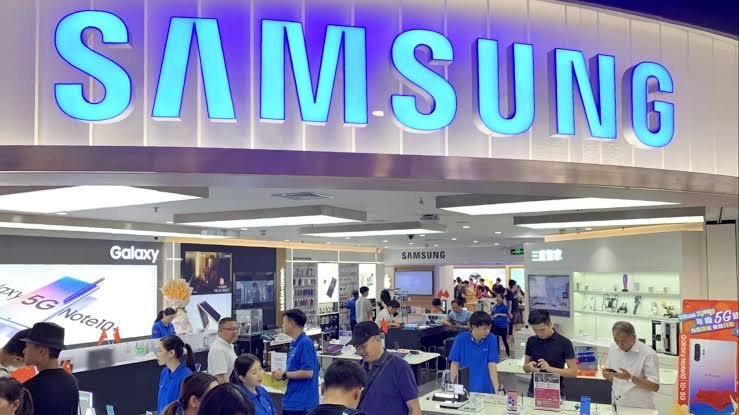
Every year, millions of Indians buy a Samsung phone or TV, and yet a surprisingly common question still circulates: is Samsung actually Chinese? The confusion makes sense on the surface — China dominates global electronics manufacturing, and casual observers often lump every Asian tech giant into the same bucket. But Samsung’s story is genuinely different from brands like Xiaomi or Lenovo, and the answer is a clear, unambiguous no.
| Aspect | Details |
| Nationality | South Korean |
| Founded | March 1, 1938, Taegu, Korea |
| Founder | Lee Byung-chul |
| Headquarters | Suwon (Samsung Electronics) / Seoul (Samsung Group) |
| Corporate structure | Chaebol (family-controlled conglomerate), led by Lee Jae-yong |
| Global smartphone share | ~18% (Q4 2025), second only to Apple |
| Top manufacturing hubs | Vietnam (~50% of output), India, Brazil, Indonesia |
| Chinese ownership | None |
The Short Answer
Samsung is unambiguously a South Korean company, founded in 1938 and headquartered in South Korea to this day. It has never been Chinese-owned, and no Chinese entity holds any controlling stake in Samsung Electronics or the broader Samsung Group.
- Samsung began as a small grocery trading company in Taegu, Korea, dealing in noodles and dried goods exported to China — a genuinely ironic historical footnote given today’s confusion.
- It’s part of the Samsung Group, the largest chaebol (family-controlled conglomerate) in South Korea, historically led by the Lee family.
- Samsung existed for decades before China emerged as the world’s dominant electronics manufacturing hub — the confusion is a modern misconception, not a historical fact.
Why So Many People Assume Samsung Is Chinese
- China’s manufacturing dominance across mobile devices, home appliances, and consumer electronics has made people reflexively associate large Asian tech brands with China specifically.
- China has countless homegrown brands — Xiaomi, Oppo, Vivo, Huawei — competing directly against Samsung, and this proximity in the market blurs national origin in casual conversation.
- Samsung’s products were once assembled in China, having started manufacturing there in 1992, which likely reinforced the misconception even after production genuinely shifted elsewhere.
- General unfamiliarity with the distinction between South Korea and China as separate countries with entirely different corporate ecosystems contributes further to the confusion.
Where Samsung Phones Are Actually Made Today
This is genuinely useful to know, since manufacturing location is often what people are really asking about when they wonder if a brand is “Chinese”:
- Vietnam is now Samsung’s largest production hub, accounting for roughly 50% of global smartphone output, with six manufacturing plants and an R&D centre in Hanoi.
- India is the second-largest hub — the Noida factory in Uttar Pradesh, inaugurated in 2018, can produce 120 million units annually, alongside a smaller plant in Tamil Nadu.
- Brazil has assembled Samsung phones since 1999, serving Latin American markets through favorable local tax arrangements.
- Indonesia produces roughly 800,000 units annually for its local market.
- Samsung has largely shifted production out of China, now relying on Chinese suppliers mainly for components and supply chain support rather than final device assembly.
Samsung’s Ownership Structure
- Samsung Group operates as a chaebol, a uniquely Korean corporate structure involving interlinked family-controlled businesses.
- Lee Jae-yong currently serves as chairman, continuing the family leadership lineage that began with founder Lee Byung-chul.
- Samsung’s ownership remains entirely South Korean, with no controlling foreign stake from China or any other country.
- The broader Samsung Group extends well beyond electronics into shipbuilding, construction, insurance, finance, biopharmaceuticals, and fashion — reflecting the sprawling nature of a traditional Korean chaebol.
Samsung’s Genuine Global Scale
- As of 2024, Samsung holds the world’s fifth-highest brand value globally, competing directly with Apple, Google, and Microsoft.
- Employs over 262,000 people worldwide across its various subsidiaries.
- Became the world’s largest smartphone vendor by 2012, and currently holds roughly 18% global market share, second only to Apple’s 25%.
- Maintains design studios across Seoul, Delhi, Europe, Japan, and Latin America, reflecting genuine international R&D investment beyond its Korean headquarters.
The Bottom Line
Samsung is genuinely and unambiguously South Korean — founded in 1938, headquartered in Suwon and Seoul, family-led through the Lee dynasty, and entirely free of Chinese ownership at any level. The confusion largely stems from China’s outsized role in global electronics manufacturing and the general difficulty many people have distinguishing between different Asian countries’ tech ecosystems, but the facts leave no real ambiguity: Samsung’s nationality, leadership, and corporate control all trace firmly back to South Korea.
FAQs
Q1. Does Samsung manufacture anything in China today?
Very little for final assembly — Samsung largely relies on Chinese suppliers for components rather than full device manufacturing there now.
Q2. Is Samsung’s smartphone market share strong in China itself?
No, Samsung holds only a small market share in China, where domestic brands like Xiaomi and Huawei dominate.
Q3. Are Samsung phones sold in India actually made in India?
Yes, Samsung’s Noida factory produces both budget and flagship Galaxy models specifically for the Indian and export markets.
Q4. Is there any Chinese investment or stake in Samsung Electronics?
No, Samsung remains fully controlled by South Korean stakeholders with no Chinese corporate ownership involved.