
We closed out the Samsung question earlier in this series with a clear “no, South Korean” — and LG, its longtime domestic rival, deserves exactly the same clarity. Between LG TVs, refrigerators, and washing machines sitting in millions of Indian homes, this is genuinely one of the more commonly misidentified brands, largely for reasons that should feel familiar by now.
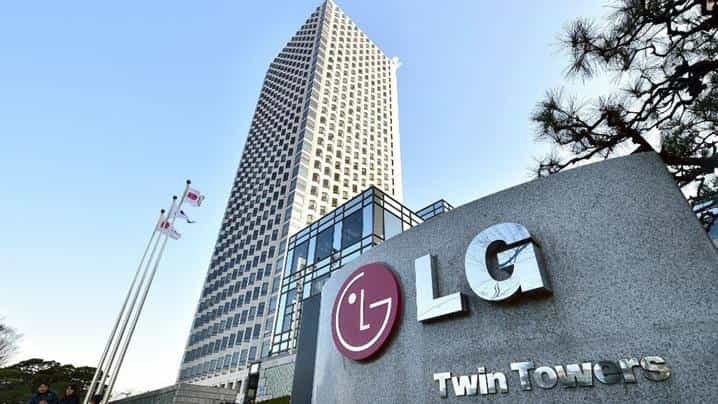
| Aspect | Details |
| Nationality | South Korean |
| Founded | 1947, as Lucky Chemical Industrial Corp |
| Founder | Koo In-hwoi |
| Headquarters | Yeouido-dong, Seoul, South Korea |
| Corporate structure | Chaebol (Koo family-controlled conglomerate) |
| Global rank | World’s 2nd-largest electronics maker |
| Key subsidiaries | LG Display, LG Chem, LG Energy Solution, LG Innotek |
| Global operations | 128+ facilities worldwide (2020) |
The Short Answer
No, LG is not a Chinese company. LG Corporation is a South Korean multinational conglomerate, founded in Seoul in 1947 (some sources cite 1958 for the electronics division specifically), and headquartered in Yeouido-dong, Seoul, to this day.
- LG was originally named Lucky Goldstar, and the “LG” name itself derives directly from combining “Lucky” and “Goldstar” — the company’s two founding business lines.
- LG remains a proudly South Korean company controlled by the founding Koo family through a traditional chaebol structure, similar to how Samsung operates under the Lee family’s influence.
- Despite its genuinely massive global manufacturing footprint, LG’s ownership, headquarters, and strategic direction remain firmly rooted in Seoul.
Why LG Gets Mistaken for Chinese So Often
- The confusion consistently stems from the fact that LG relies heavily on Chinese manufacturing to produce a substantial portion of its products sold worldwide.
- As early as 2008, LG operated about 82 global facilities, with 17 of those located throughout China — a genuinely significant concentration that shaped consumer perception over the years.
- LG’s manufacturing strategy evolved over time — in its earlier decades, most production happened domestically in Korea, but as labor costs rose and global competition intensified, the company began shifting more manufacturing overseas, particularly to China during the 1990s and 2000s.
- Specific components, like LG OLED TV panels, are notably manufactured with significant Chinese production involvement — exactly the kind of high-visibility product that reinforces the Chinese-ownership misconception among everyday consumers.
LG’s Genuinely Complex Corporate Structure
- LG Corporation operates as a massive chaebol conglomerate with over 70 subsidiaries spanning electronics, chemicals, telecommunications, and more.
- Key subsidiaries include LG Display (a world leader in OLED and TFT-LCD panel manufacturing, 37% owned by LG Electronics), LG Chem, and LG Energy Solution (a major global EV battery manufacturer).
- LG Energy Solution specifically holds a 30% share of the global EV battery market as of November 2025, ranking among the world’s top battery makers alongside Samsung SDI and SK On — together, these South Korean firms rank second only to Chinese manufacturers in overall global EV battery market share.
- This vertical integration means LG actually supplies components to some of its own global competitors — LG Display and LG Chem provide high-end OLED panels and EV batteries to companies like Apple and Tesla, a genuinely notable business dynamic.
LG’s Genuine Global Manufacturing Network
- By 2020, LG had expanded to 128 global operations worldwide, reflecting continued growth well beyond its Korean origins.
- LG maintains significant domestic production power within South Korea, where the highly specialized workforce focuses primarily on research and development — next-generation prototypes are typically developed and manufactured in small batches in Korea before scaling to mass production in other regional hubs.
- The company has also expanded US-based appliance manufacturing in recent years, reflecting a broader strategy of diversifying production beyond pure Chinese dependency.
- Notably, LG exited the smartphone manufacturing business entirely in 2021, transitioning its relevant production facilities toward home appliance manufacturing instead — a significant strategic pivot away from a market segment where it had struggled to compete against Samsung, Apple, and Chinese brands.
LG’s Position in the Indian Market
- LG maintains a genuinely strong, long-standing presence in India across televisions, refrigerators, washing machines, and air conditioners, competing directly with Samsung and domestic Indian brands.
- As covered elsewhere, LG holds a commanding position in India’s AC market specifically, alongside its broader consumer electronics portfolio spanning kitchen appliances and home entertainment.
- LG’s manufacturing presence in India, similar to its approach globally, involves genuine local assembly and production investment, reflecting the same “manufacture where the market demands it” strategy the company applies worldwide.
The Bottom Line
LG is unambiguously South Korean — founded in Seoul in 1947 as Lucky Goldstar, still headquartered there today, and controlled by the founding Koo family through a traditional chaebol conglomerate structure spanning over 70 subsidiaries. The persistent confusion around LG’s nationality stems entirely from its substantial Chinese manufacturing footprint, a pattern that mirrors virtually every other global electronics brand covered throughout this series, but this manufacturing reality doesn’t change LG’s fundamental Korean ownership, corporate governance, or the genuine research and development leadership that remains concentrated in Seoul.
FAQs
Q1. Does LG still manufacture smartphones anywhere, or has it exited that business entirely?
LG completely exited smartphone manufacturing in 2021, redirecting relevant production facilities toward its stronger home appliance business instead.
Q2. Is LG Display a separate company from LG Electronics, or fully owned by it?
LG Display is a separate publicly traded entity, though LG Electronics holds a significant 37% ownership stake in the company.
Q3. Why does LG supply components to competitors like Apple and Tesla?
LG’s subsidiaries LG Display and LG Chem operate as independent component suppliers, generating revenue by selling OLED panels and batteries industry-wide.
Q4. Is LG’s Chinese manufacturing presence larger than its South Korean production today?
LG maintains significant domestic Korean R&D and prototype manufacturing, while scaling mass production across multiple countries including China and increasingly the US.